The table mechanics are familiar. The market rules are not. This guide covers the parts that change when your inventory is Pokémon: raw condition, TCGplayer pricing, Japanese comps, release-week demand, sealed product, and a buyer base that may be collecting, playing, or doing both.
Checked July 17, 2026.
Price the language, condition, and audience.
The short version
Use TCGplayer Market Price for ordinary English raw singles, then verify scarce cards with recent sold listings.
Use eBay solds and 130point for slabs, vintage, Japanese cards, errors, promos, and thinly traded inventory.
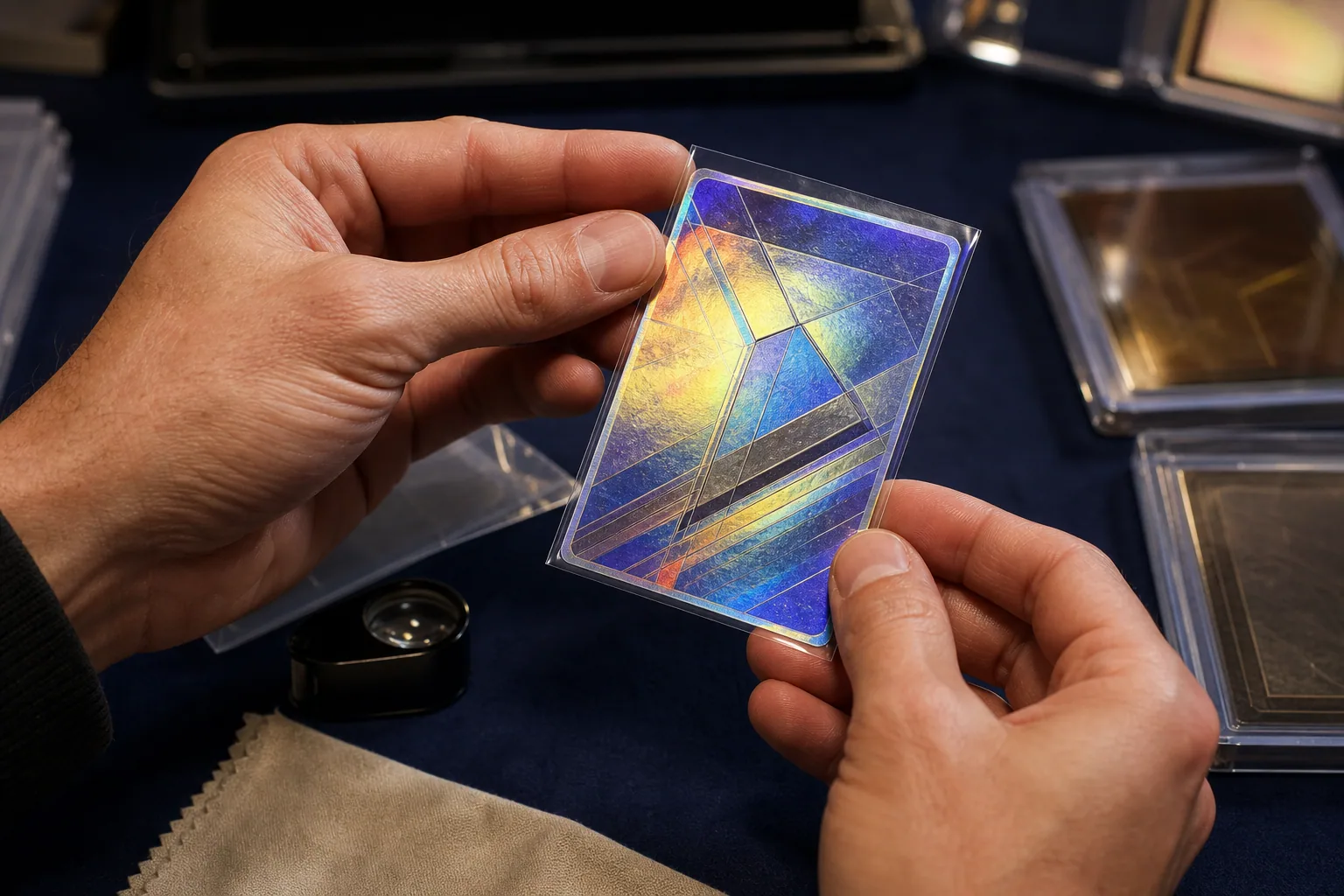
Condition is part of the price. Check whitening, dents, print lines, scratches, centering, and surface marks under direct light.
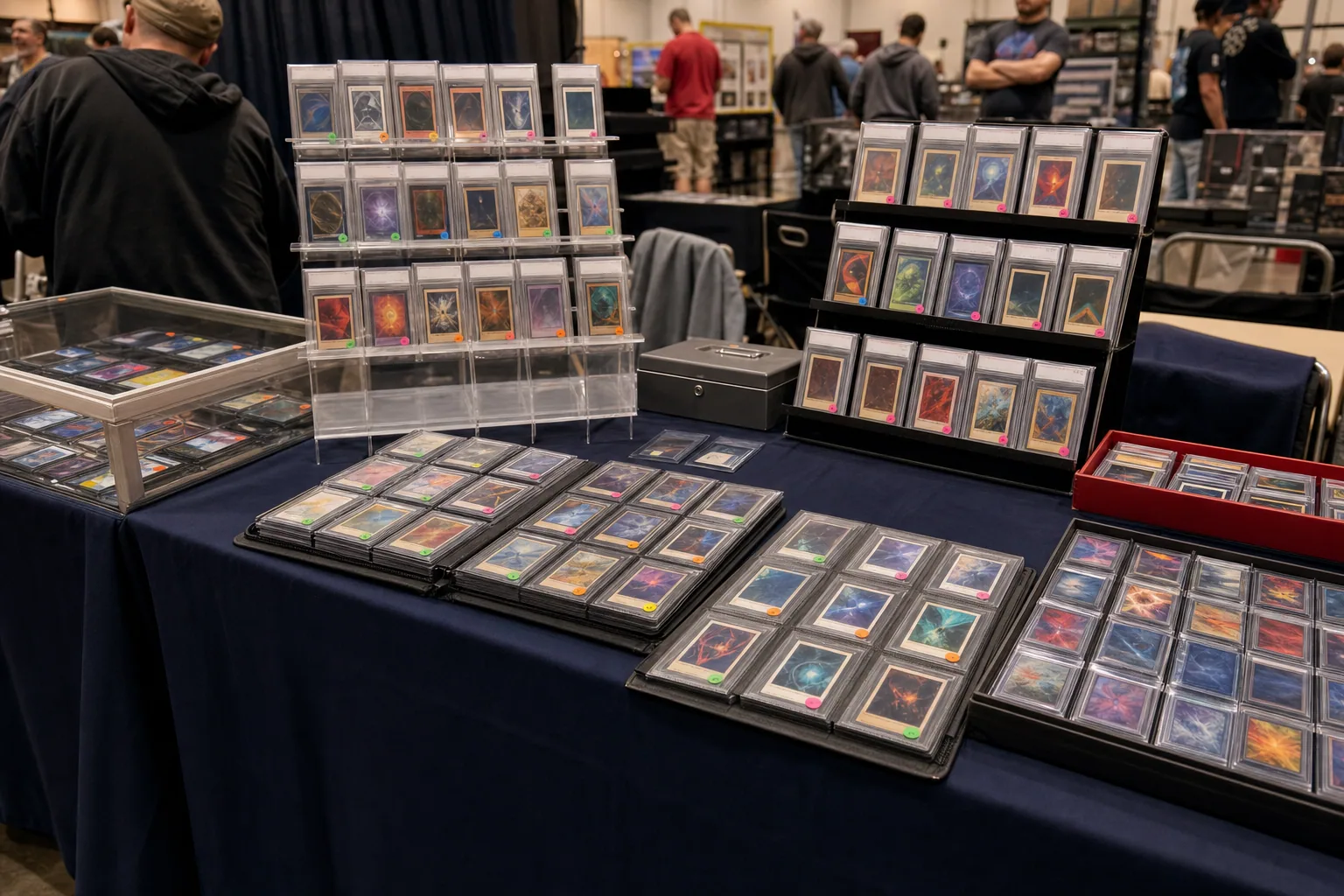
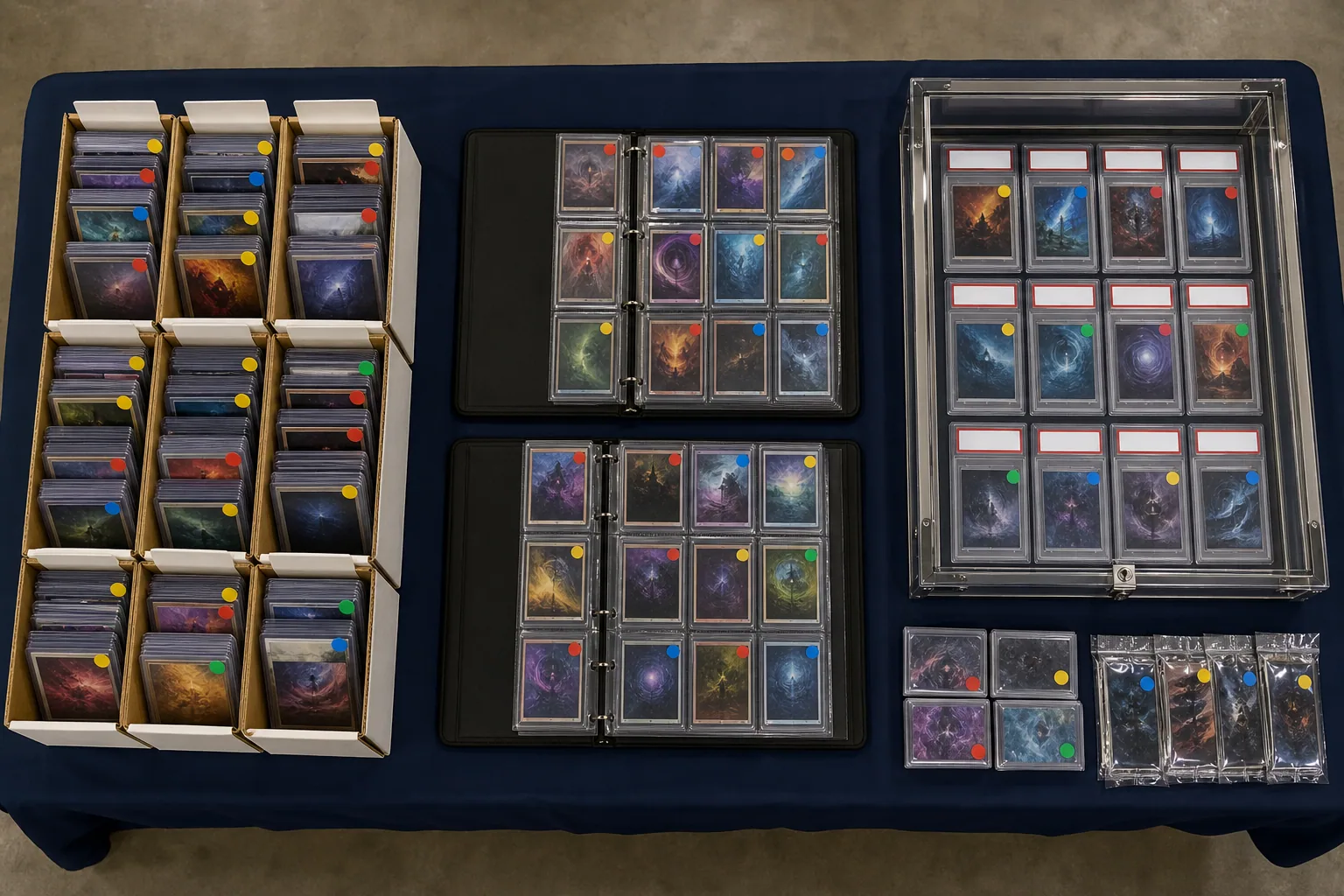
Divide the table into clear lanes: low-cost cards, raw binder cards, and secured chase inventory.
Reprice around set releases and event weekends. Pokémon demand can move faster than a month-old sticker.
Pricing
How should a vendor price Pokémon cards?
English raw singles start with TCGplayer
Market Price is based on completed transactions, which makes it the fastest shared reference for a standard English card. Lowest Listing is an asking price. It can help you see current supply, but it does not tell you what a buyer paid.
Match the exact printing before you copy a number. First edition, reverse holo, stamped, promo, prize-pack, and ordinary set versions can look close in a hurried search and sell in completely different ranges.
Japanese, vintage, and graded cards need sold comps
TCGplayer is not the final market for many Japanese-language, scarce promo, vintage, or graded cards. Search recent eBay sold listings for the exact language, set, card number, and grade. Use 130point when a crossed-out Best Offer hides the real transaction price.
Thin market? Use a range, not false precision. A single high auction result does not reset the price until later sales confirm it. The full comp workflow is in the sports card pricing guide, and the same evidence rules apply here.
Condition desk
What should you inspect before pricing a raw card?
Edges and corners
Check the back border for whitening, then tilt the front for corner compression. Dark-backed cards make small edge wear especially obvious.
Surface
Move the card under direct light. Look for print lines, roller marks, scratches, dents, binder rings, and pressure marks that disappear in flat photos.
Centering and shape
Compare border widths on both faces. Then sight across the card for bends or warping. A card can look clean in a sleeve and still fail the flat-table check.
Say flaws out loud before money moves and mark the sleeve. A buyer may accept damage at the right number. They will not accept discovering it after the show.
Merchandising
How should a Pokémon vendor table be organized?
Fast lane
Playable and low-cost singles
Sort by a rule buyers understand in one glance: price, set, type, or character. Dollar boxes need hard dividers and clean price signs. Do not make someone ask whether every card is one dollar or only the first row.
Binder lane
Raw collector cards
Use side-loading or top-loading binders for mid-tier raw inventory. Group by era or set, leave breathing room around the best cards, and put a small price sticker on the sleeve rather than the card.
Case lane
Slabs, chase cards, and sealed product
Lock the high-value inventory, angle slabs toward the aisle, and keep sealed boxes close enough to inspect before handing them over. A photocopy in the binder can advertise a card that stays secured in the case.
Build for two kinds of buyer
A collector may shop by character, artwork, language, or grade. A player may shop by legality, deck need, and price. Signage and sorting should let both find their lane without asking you to search every box. Put new and playable inventory where it can move quickly, and keep vintage or art-driven inventory grouped by the logic collectors use. For showcases, acrylic slab cases, and UV tradeoffs, use the display-protection section of the first-table setup guide.
Buying and trades
Pay for liquidity, not excitement
A card with deep daily sales deserves a stronger cash offer than a scarce card with one heroic comp and no next buyer. State the comp and the offer separately. That keeps the conversation about turnover and margin instead of pretending the card is worth less.
Release-week cards can be liquid and volatile at the same time. Shorten your hold, use smaller positions, and recheck the market before every show day.
Security
Slow down when the table speeds up
Count cards into and out of every binder deal. Keep backpacks and restock boxes behind you. Only one high-value card leaves the case at a time, and it stays in sight until it returns or the sale closes.
For slabs, run the grader's cert and match the card, grade, and available holder image. A valid cert number alone does not prove the slab in your hand is the one in the record.
From the floor
Useful signals, without the endless feed
Ideas spotted in official updates and public show accounts. We link the source, add the operator takeaway, and skip the infinite feed.
Release timing
Instagram · @pokemontcg
Curated
Treat release posts as a repricing alarm
Use the official account to confirm product announcements and event timing, then recheck your own inventory against sold comps. The post is a signal to do the work, not a price source.
Why it matters: New sets can change buyer attention before an older sticker has time to look stale.
Source checked July 17, 2026. No media copied or embedded.
TCG floor
Instagram · @collect_a_con
Curated
Build a table that reads through a busy aisle
Use the event account as a crowd-level reference. Watch which signs, vertical displays, and product groupings remain understandable when the aisle is full and the camera is moving.
Why it matters: If the offer only makes sense from three feet away, most of the room will walk past it.
Source checked July 17, 2026. No media copied or embedded.
Regional shows
Instagram · @dfw_card_show
Curated
Use promoter posts as a demand check
Regional-show announcements reveal the advertised mix of sports cards, TCG, and collectibles. Compare that pitch with your inventory before you book and pack.
Why it matters: A table built for the wrong buyer mix starts the weekend with an avoidable handicap.
Source checked July 17, 2026. No media copied or embedded.
Quick answers
Pokémon card vending FAQ
Where can I find an official Pokémon vending machine?
Use the Pokémon Center automated retail support page for official machine information and locations. Sports Card Vending covers people who sell cards at shows, not automated retail machines.
What price guide should a Pokémon card vendor use?
Use TCGplayer Market Price for ordinary English raw singles, then verify scarce, Japanese, vintage, and graded cards with recent eBay sold listings or 130point. Asking prices are not comps.
How should I organize a Pokémon vendor table?
Create clear price lanes: low-cost singles and playable cards in labeled boxes, mid-tier raw cards in binders, and high-value slabs, sealed product, and chase cards in a locked showcase.
Should I grade Pokémon cards before a show?
Grade only when the likely sale price after fees and grading risk clearly beats the raw sale price. Price the realistic grade, not the hoped-for 10, and check current grader service levels before submitting.
Is Sports Card Vending affiliated with Pokémon?
No. Sports Card Vending is an independent publication for card-show sellers and is not affiliated with, endorsed by, or sponsored by The Pokémon Company or Nintendo.
Independent publication notice
Sports Card Vending is an independent card-show vendor publication. It is not affiliated with, endorsed by, or sponsored by The Pokémon Company, Nintendo, Creatures, Game Freak, Pokémon Center, TCGplayer, or the grading companies discussed here. Pokémon and related names are trademarks of their respective owners.